
The goal of SEO (Search Engine Optimization) is to increase your website’s exposure on search engines such as Google, Bing, or Yahoo so that it shows up at the top of search results when people are looking for goods, services, or information about your company.
By making your website user-friendly and easy for search engines to understand, SEO aims to increase organic (unpaid) traffic.
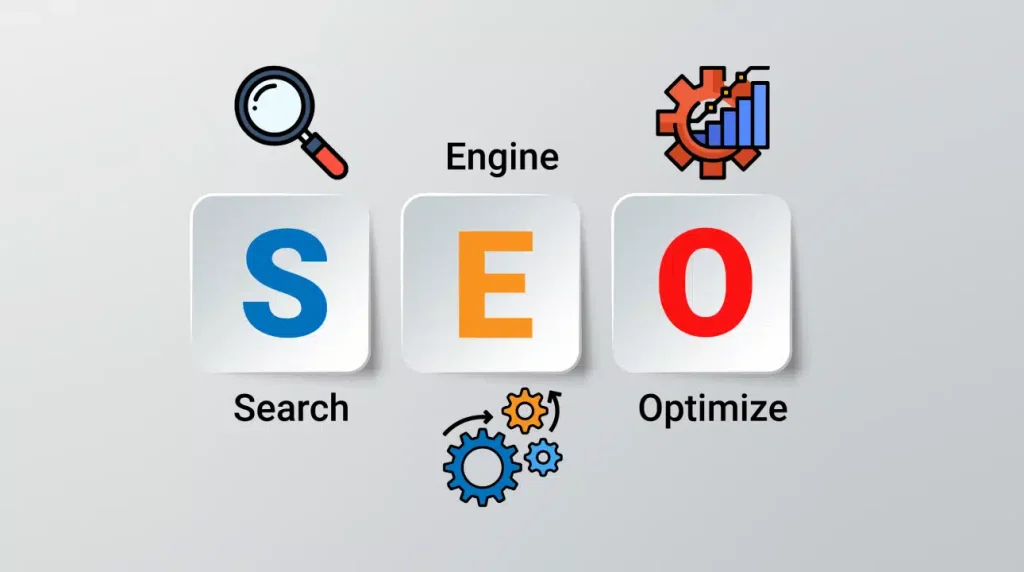
⚙️ The Step-by-Step Process of SEO:
1. Crawling 🕷
Bots, also known as crawlers or spiders, are used by search engines to search the internet and find new or updated web pages.
These crawlers collect information about every webpage they come across by following links from one page to another.
- Indexing 📚
Following crawling, the information gathered is kept in Google’s index, which is a huge database of every webpage.
Your website won’t show up in search results if it isn’t indexed.
- Positioning 🏆
Google’s algorithm determines which pages are most pertinent and helpful when a user submits a query (such as “best digital marketing agency”) and ranks them appropriately.
There are hundreds of elements that affect ranking, but the primary ones are:
- Relevance: The degree to which your material corresponds with the search term
- Quality: The worth and reliability of your stuff
- User Experience: How user-friendly and entertaining your website is
- Backlinks: The number of credible websites that link to your page.
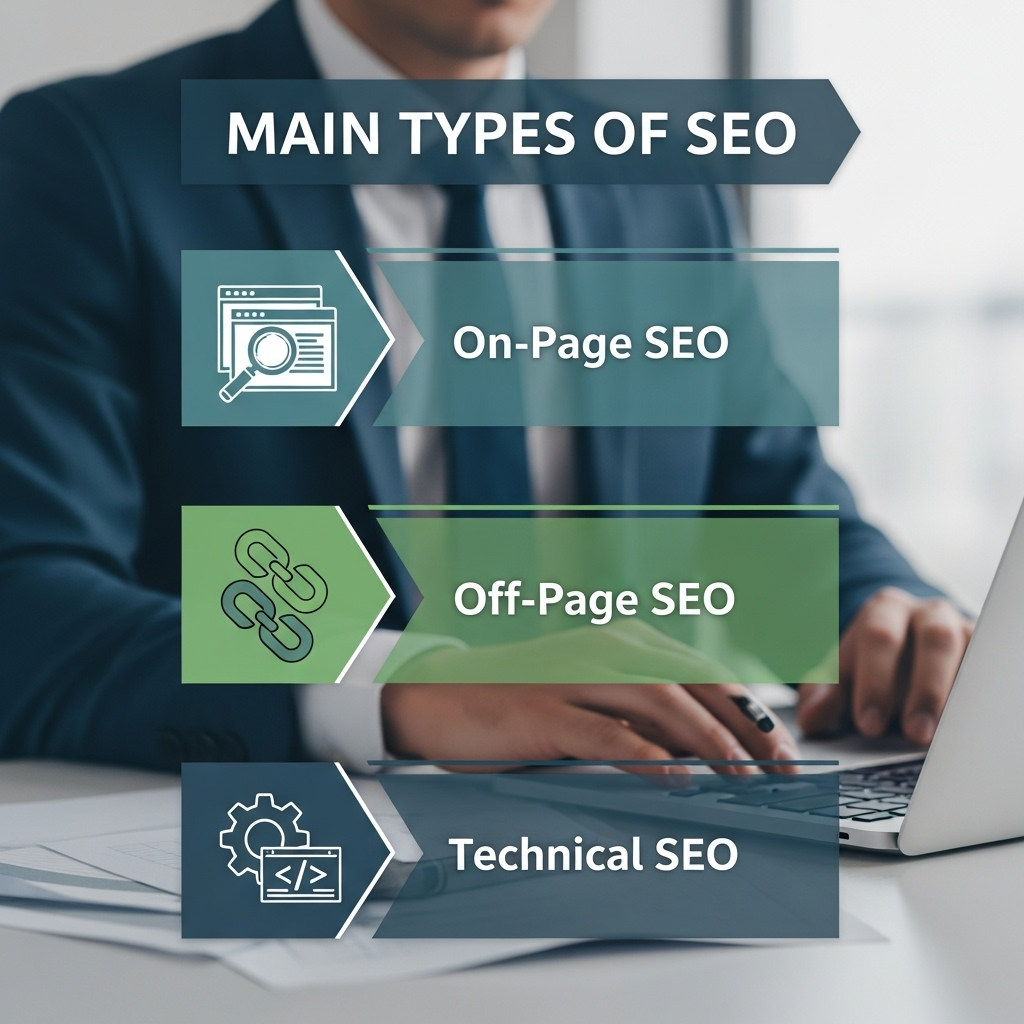
🔍 Main Types of SEO
1. SEO on-page 🧩
Your website has been optimized to improve search engine comprehension of your content.
Important components:
- Make use of specific keywords in headings, titles, and text.
- Improve the descriptions and meta titles.
- Make use of original, high-quality content
- Give pictures alt text.
- Keep your design mobile-friendly and your loading time quick.
2.SEO Off-Page 🌐
Activities done outside of your website to increase authority and credibility.
Important components:
- Generating backlinks from reliable websites
- Distributing information on social media
- Promoting evaluations and references from other websites
3. Technical SEO ⚙️
Enhancing your website’s technological architecture to make it easier for search engines to crawl and index.
Important components:
- Fix mistakes and broken links.
- Make use of a secure website (HTTPS).
- Send Google an XML sitemap.
- Improve the speed of the website.
- Make sure it is responsive on mobile devices.
📈 How SEO Helps Your Business
- Boosts visibility: Places your website at the top of search results for pertinent terms.
- Increases credibility: People are more likely to trust websites with high organic rankings.
- Long-term effects: SEO continues to increase traffic over time, in contrast to sponsored advertisements.
- Enhances user experience: A website that is optimized is quicker, easier to understand, and more beneficial.
- Produces qualified leads: reaches those who are actively seeking what you have to offer.
💡 Example
Consider yourself the owner of a salon in Mumbai.
SEO can help your website rank at the top of Google when someone searches for a term like “best hair salon in Mumbai,” which will drive actual clients to your establishment.
🚀 Summary
| SEO Step | Description |
|---|---|
| Crawling | Search engines discover your website |
| Indexing | Your pages are stored in Google’s database |
| Ranking | Google decides where your site appears in search results |
| Optimization | You improve your website’s content, structure, and authority |
✅ In Simple Words:
SEO is the process of making your website both user-friendly and Google-friendly.
When you do it correctly, your website ranks better in search results, which generates more leads, sales, and visitors without requiring you to pay for advertisements.